


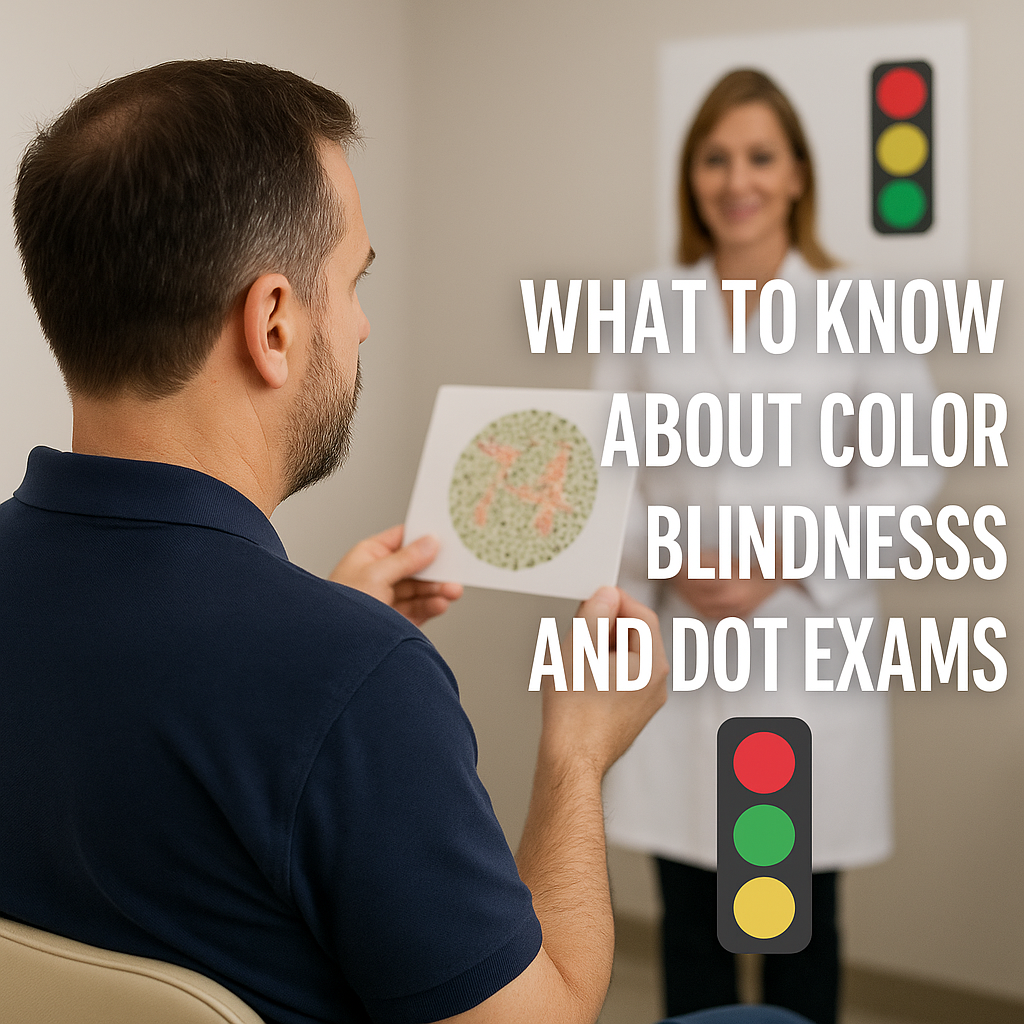
What to Know About Color Blindness and DOT Exams
Why Color Vision Matters in CDL Safety
Commercial drivers need to recognize traffic signals, warning lights, and road signs quickly and accurately. That’s why the DOT physical includes a color vision test. While color blindness doesn’t automatically disqualify a driver, it can affect exam results and how you’re cleared to drive.
1. DOT Color Vision Standard
To pass the DOT exam, drivers must be able to:
- Distinguish red, green, and amber traffic signal colors.
- Read and respond correctly to road signs and safety markings that rely on color.
Unlike visual acuity (20/40 vision), there isn’t a strict “pass/fail” measurement for color vision—it depends on whether your color perception allows you to drive safely.
2. Types of Color Blindness That May Affect Drivers
Color blindness comes in different forms, including:
- Red-green color blindness: Difficulty distinguishing between red and green.
- Blue-yellow color blindness: Less common, but affects perception of certain road signs.
- Complete color blindness: Very rare, where all colors look the same.
Most drivers with mild red-green color blindness can still be cleared if they demonstrate functional ability to recognize traffic lights correctly.
3. How Color Vision Is Tested During DOT Exams
During your exam, the medical examiner may use:
- Ishihara plates (dot-pattern color test)
- Lantern test (used for light recognition)
- A practical evaluation of how well you identify red, green, and amber lights
If you cannot pass the Ishihara plate test but show you can safely distinguish traffic light colors, you may still qualify.
4. Does Color Blindness Automatically Disqualify You?
No. The DOT does not automatically disqualify drivers with color blindness. What matters is whether you can:
- Recognize and react correctly to traffic signals
- Understand warning lights and road signs
- Safely perform your driving duties
If your condition is severe enough to interfere with safety, you may not qualify—but many drivers with mild to moderate color blindness do pass.
5. Tips for Drivers with Color Blindness
- Be honest during the exam—don’t try to guess or hide the condition.
- Explain how you manage it (for example, using position of lights rather than color alone).
- Practice extra caution at intersections or during poor weather when lights may be harder to distinguish.
- Schedule regular eye exams to track changes in vision.
Quick Recap
- DOT exams require you to distinguish red, green, and amber lights.
- Mild color blindness doesn’t always mean disqualification.
- Functional ability matters more than perfect color vision.
- Severe cases may affect CDL certification, but many drivers adapt successfully.
Stay Road-Ready with DOT Modesto
At DOT Modesto, we understand how important your vision is to your driving career. Our medical examiners work with you to ensure fair testing and help you stay compliant with DOT standards.
👉 Visit DOTmodesto.com to schedule your DOT physical today.