


Amputation and CDL License Requirements: What Truck Drivers Need to Know
Introduction: Can You Drive a Commercial Vehicle After an Amputation?
For commercial truck drivers, a limb amputation can feel like the end of a career on the road. The questions come fast: Will I lose my CDL? Can I still pass a DOT physical? Is there any path back to driving? The good news is that an amputation does not automatically disqualify a driver from holding a Commercial Driver’s License (CDL). Federal regulations provide specific pathways for drivers with limb loss to continue operating commercial motor vehicles — but the process requires careful navigation of medical standards, federal exemptions, and physical examinations.
Understanding how the Federal Motor Carrier Safety Administration (FMCSA) handles amputation cases is essential for any commercial driver facing this situation. The rules are detailed, and meeting them requires working closely with a certified DOT medical examiner who understands the specific requirements. This article breaks down what CDL drivers with amputations need to know about federal standards, exemption programs, and how to stay on the road legally and safely.
FMCSA Physical Qualification Standards and Amputation
The FMCSA sets minimum physical qualification standards for commercial motor vehicle (CMV) operators under 49 CFR Part 391. These standards address vision, hearing, cardiovascular health, and physical ability — including limb function. According to federal regulations, a driver must have no loss of a foot, leg, hand, or arm, or a driver who has such a loss may still be qualified if they meet certain conditions and obtain the appropriate federal exemption or Skill Performance Evaluation (SPE) certificate.
This distinction is critically important. The regulation does not say that all amputees are automatically disqualified. Instead, it establishes that drivers with limb loss must pursue an alternative qualification route. The two primary pathways are the FMCSA Limb Exemption Program and the Skill Performance Evaluation (SPE) Certificate Program. Each has its own application process, requirements, and limitations, and not every driver will qualify for both options.
During a DOT physical examination, the medical examiner will evaluate your overall physical condition, including the nature and extent of any amputation, whether you use a prosthetic device, and how your limb loss affects your ability to safely operate a commercial vehicle. The examiner cannot certify a driver with a disqualifying condition without the appropriate federal documentation in place.
The Skill Performance Evaluation (SPE) Certificate
The Skill Performance Evaluation Certificate Program is administered by FMCSA and allows drivers with limb loss — or loss of limb function — to demonstrate that they can safely operate a CMV. To obtain an SPE certificate, a driver must apply to the FMCSA Field Administrator in their region. The application requires documentation of the driver’s medical history, the nature of the amputation or limb loss, and information about any prosthetic devices used.
Once the application is reviewed, the driver must complete a performance evaluation conducted by a state or federal official. This evaluation assesses whether the driver can safely perform all functions required to operate a commercial motor vehicle, including steering, braking, shifting, and emergency procedures. The SPE certificate, if granted, specifies the type of vehicle the driver is qualified to operate and any adaptive equipment that must be used.
It is important to understand that an SPE certificate is vehicle-specific and equipment-specific. If a driver changes the type of vehicle they operate or modifies their adaptive equipment, the certificate may need to be updated. Drivers should always carry their SPE certificate documentation and ensure their DOT medical examiner has a copy on file during their physical examination.
FMCSA Exemption Programs for Limb Loss
In addition to the SPE certificate program, the FMCSA also operates a broader Exemption Program that allows drivers who do not meet standard physical qualifications to apply for a federal exemption. These exemptions are considered on a case-by-case basis and require the driver to demonstrate that granting the exemption would achieve a level of safety equivalent to — or greater than — the standard qualification requirements.
Applying for an FMCSA exemption involves submitting a detailed application that includes medical records, a statement from a licensed medical professional, and documentation of the driver’s safety history. The FMCSA publishes exemption applications and decisions in the Federal Register, and the process can take time. Drivers are encouraged to begin the application process well in advance of their CDL renewal or DOT physical date.
Not every application is approved, and the FMCSA considers factors such as the type and level of amputation, whether a prosthetic device is used, the driver’s overall health, and their history of safe driving. Working with a knowledgeable DOT medical examiner during this process can help ensure that your medical documentation is thorough, accurate, and supports your application effectively.
What to Expect at Your DOT Physical With an Amputation
If you have a limb amputation and are preparing for a DOT physical, preparation is key. Your certified DOT medical examiner will review your complete medical history, evaluate the affected limb or residual limb, assess any prosthetic devices you use, and determine whether your current condition — combined with your SPE certificate or federal exemption — allows for certification. Bringing all relevant documentation to your appointment is essential.
Documents you should bring to your DOT physical include your current SPE certificate or FMCSA exemption letter, records from your treating physician regarding your amputation and current functional status, documentation of any prosthetic devices including manufacturer specifications, and any prior DOT medical examiner cards. The more complete your documentation, the smoother your examination will be.
Drivers should also be aware that DOT physicals are typically required every two years, though the medical examiner may require more frequent evaluations depending on the driver’s overall health. If your condition changes — for example, if you receive a new prosthesis or experience complications — you should notify your medical examiner and update your records accordingly. Staying proactive about your health documentation is one of the most important things an amputee CDL driver can do.
Adaptive Equipment and Vehicle Modifications
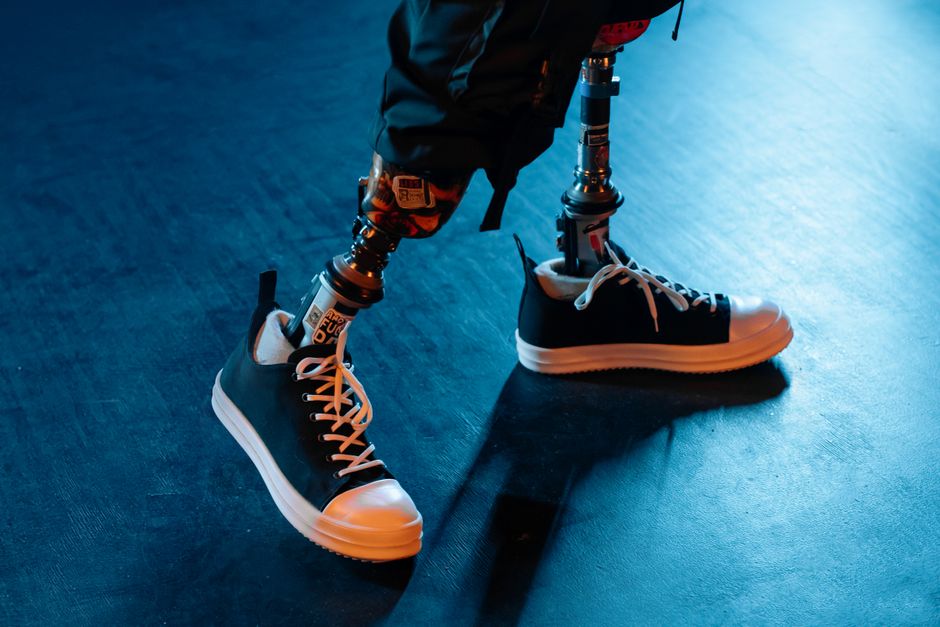
Many drivers with amputations operate commercial vehicles successfully using adaptive equipment. Hand controls, modified steering systems, prosthetic limbs designed for driving, and other assistive technologies can make it possible for drivers with upper or lower limb loss to safely operate a CMV. However, any adaptive equipment used must be approved and documented as part of the driver’s SPE certificate or exemption.
The type of adaptive equipment required will depend on which limb is affected, the level of amputation, and the type of commercial vehicle being operated. Upper limb amputations may require hand controls or steering aids, while lower limb amputations may involve modified foot pedals or prosthetic devices certified for commercial driving. A qualified rehabilitation specialist or occupational therapist who specializes in driver rehabilitation can be a valuable resource in identifying and obtaining the right equipment.
It is critical that drivers do not make modifications to their vehicles or change adaptive equipment without updating their SPE certificate or exemption documentation. Operating a CMV with unapproved equipment — even if the driver feels comfortable with it — can create both safety risks and legal liability. Always consult with your DOT medical examiner before making changes to your equipment setup.
Schedule Your DOT Physical in Modesto, CA
If you are a CDL driver with an amputation and you need a DOT physical examination in the Modesto, California area, Affection Health Care — operating as DotModesto.com — is here to help. Our clinic is staffed by a Board-Certified Family Nurse Practitioner (FNP-BC) who is a certified DOT medical examiner listed on the FMCSA National Registry. We understand the unique challenges that commercial drivers with limb loss face and are experienced in evaluating drivers with complex medical histories.
At our clinic, we take the time to thoroughly review your medical documentation, understand your current condition, and conduct a complete and accurate DOT physical examination. Whether you are renewing your medical certificate, applying for an SPE certificate, or working through the FMCSA exemption process, we can provide the professional evaluation you need. We encourage all CDL drivers to come prepared with their documentation and to ask questions — we are here to help you understand your options.
To schedule your DOT physical appointment, contact us today at (350) 216-5774 or visit us online at dotmodesto.com. Our team is committed to helping commercial drivers in Modesto and the surrounding Central Valley stay qualified, compliant, and safe on the road. Do not let uncertainty about your medical status put your CDL career at risk — reach out today and let us help you take the next step with confidence.
🛒 Recommended Products for CDL Drivers
As an Amazon Associate, Affection Health Care earns from qualifying purchases. This helps support our free health content for CDL drivers.
Comments are closed.